
GERMANY
When risk is buried, decisions slow down
FintechDashboard

THE SITUATION
A dashboard full of data. But nobody could find the risk.
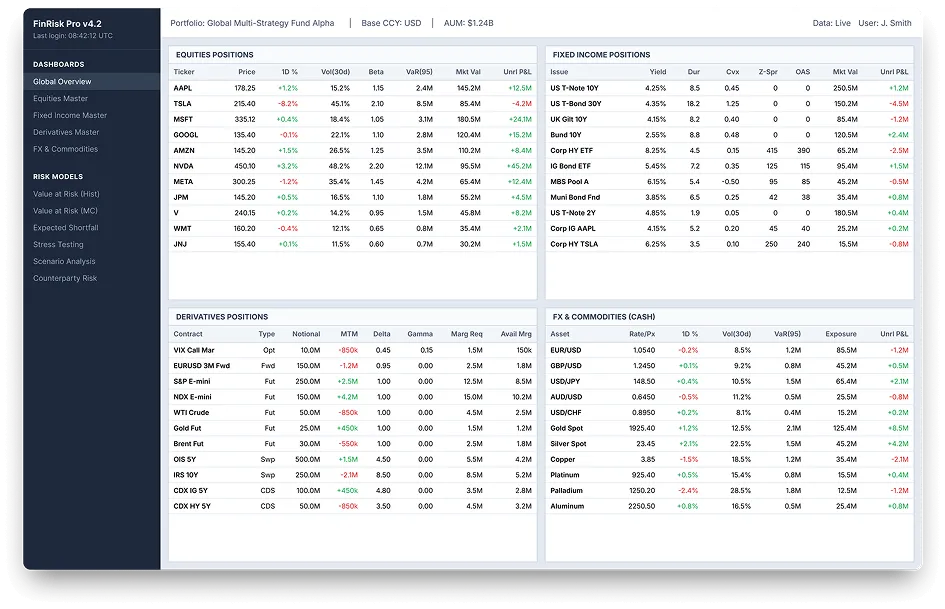
Portfolio managers at a Berlin-based fintech were making high-stakes decisions every day. The information they needed existed in the system. But finding it was the problem.
The dashboard had been built to display data comprehensively. Every metric, every signal, every variable given equal weight and equal space. The result was a screen that told you everything except what to do next.
To answer a single question - where is my risk right now - a manager had to scan across multiple widgets, cross-reference figures from different panels, and mentally assemble a picture the interface should have been drawing for them.
Users were spending time finding the risk instead of managing it. The dashboard was working against the speed the business needed.
—
THE PROBLEM
Too much information. Too little clarity.
No hierarchy of urgency
Critical risk signals sat alongside routine data. There was no visual language to distinguish what needed immediate attention from what was simply informational.
Inconsistent data organisation
Information was grouped by data type rather than by how a portfolio manager thinks about their work. Numbers that belonged together conceptually were separated across the screen.
No decision support
The dashboard was built to show data, not to support decisions. Users had developed workarounds - manual reports, spreadsheet exports, verbal briefings - to compensate for what the interface wasn't doing.
THE INTERVENTION
Risk should be visible before it is analysed.
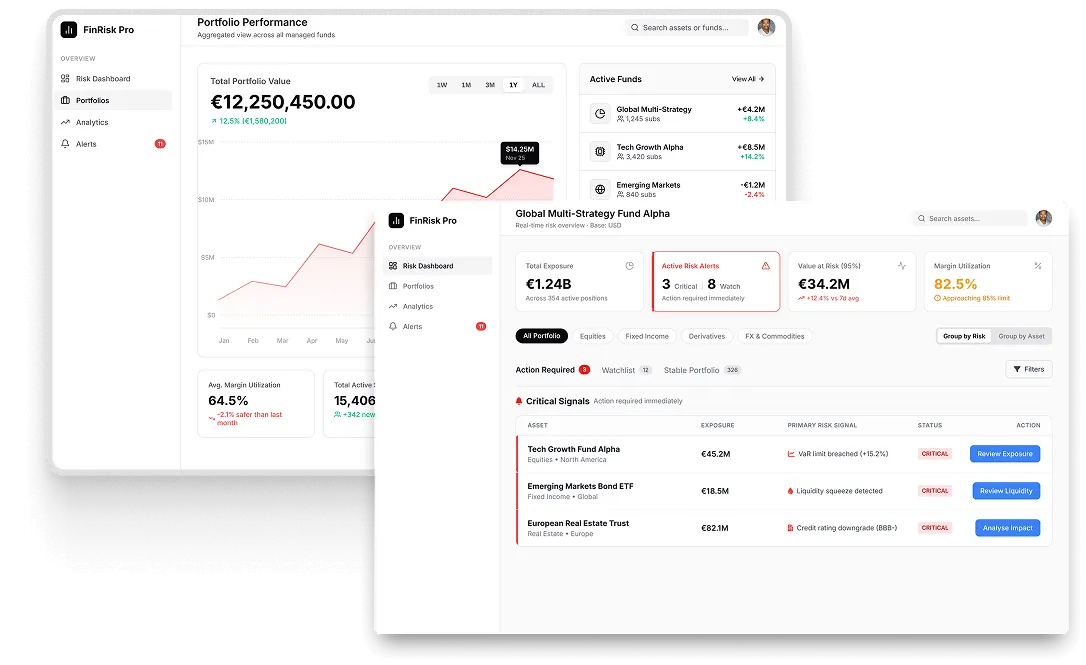
The redesigned dashboard was built around one question at a time. What do I need to act on right now? Then: what do I need to watch? Then: what is stable?
High-risk assets surfaced immediately on login. Escalation indicators made urgency legible at a glance. Dense data grids were replaced by focused panels that showed the right level of detail for the decision being made.
The navigation between portfolio layers became fluid. Moving from overview to detail and back no longer required reorientation.
—
THE RESULT
Faster decisions. Less manual work.
- Time to identify risk reduced significantly across the team.
- Response time to critical portfolio changes improved.
- Dependency on manual reporting dropped.