
UNITED STATES OF AMERICA
The Storm Response Accelerator
Utility Infrastructure & Asset ManagementDashboard

DEALING WITH LARGE DATA TO TAKE TIME SENSITIVE DECISIONS
Lag between knowing and acting was the issue.
Storm warnings weren't the issue. The lag between knowing and acting was.
The utility had access to satellite imagery, weather feeds, and asset data. But none of it came together in a way that supported urgency. Risk was buried across layers: spreadsheets, GIS tools, internal systems.
By the time teams identified which power lines or assets were vulnerable, the storm window had already narrowed.
Then came the second bottleneck, communication. Area managers were notified manually, often inconsistently, leading to uneven preparation on the ground.
And after the storm was a different kind of chaos. No clear visibility into which assets were likely damaged, forcing teams into reactive, ground-level inspections instead of targeted recovery. They had the data to predict risk, but no system to operationalise it.
THE INTERVENTION
The Storm Command Dashboard
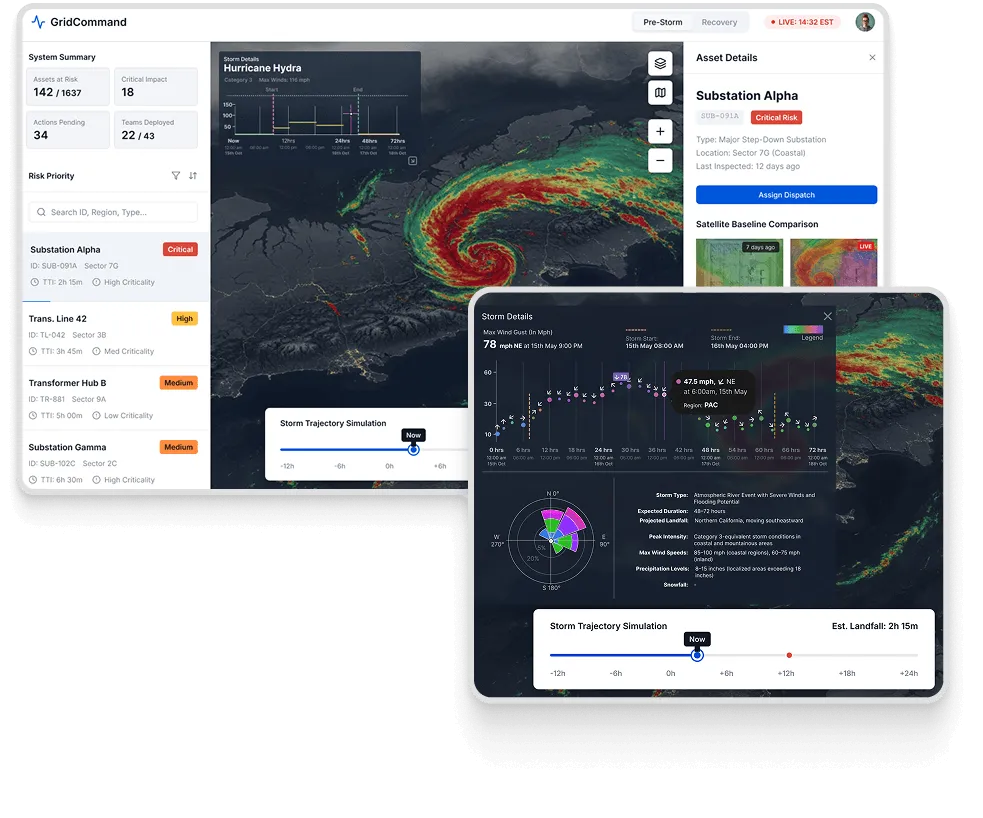
1. Live Risk Layering
Satellite imagery, weather forecasts, and asset vulnerability data were unified into a single map interface.
Assets dynamically scored based on storm trajectory, wind intensity, and historical failure patterns.
Color-coded risk tiers (Critical, High, Moderate).
Time-based overlays to show when assets would likely be impacted.
2. Priority Queue for Action
Instead of scanning maps, users saw a ranked list of assets at risk.
Sorted by severity and proximity to storm path.
Filtered by region, asset type, and operational importance.
Each asset came with recommended pre-emptive actions.
3. One-Tap Field Activation
We built a lightweight dispatch system directly into the dashboard.
Area managers auto-assigned based on asset location.
Pre-filled action alerts sent via SMS/email/app.
Status tracking: Notified -> In Progress -> Secured.
No more chasing updates. The system chased them for you.
4. Post-Storm Recovery Mode
Once the storm passed, the dashboard shifted gears automatically.
Highlighted assets in high-impact zones.
Flagged likely failure points using deviation from baseline imagery.
Generated inspection routes for field teams based on priority clusters.
Recovery went from "check everything" to "fix what matters first."
—
THE RESULT
60% reduction in time to identify and prioritise risk.
- 3x faster communication to field teams across regions.
- Significant drop in preventable asset damage due to proactive hardening.
- 30-40% improvement in post-storm recovery efficiency.
- Increased operational confidence during high-pressure weather events.